"Quantifying Movement, Understanding Control, Improving Lives"

About Human Motion Analysis Lab

The Human Motion Analysis Lab is dedicated to understanding the human motor system from the microscopic control of individual motor units to whole-body movement and environmental interaction. We integrate clinical gait analysis, high-density EMG decomposition, and ergonomic assessment to develop objective tools for diagnosis, rehabilitation, and injury prevention. Our research addresses fundamental questions in neuromuscular control while translating findings into practical applications for clinical settings and low-resource environments. We are committed to training the next generation of biomedical engineers and fostering local innovation in healthcare technology.
5
Active Projects
10
Lab Members
3
Publications
2021
Year Founded
Research Pillars

Our Research

Three integrated domains spanning from the neural control of muscle to whole-body interaction with the physical world.

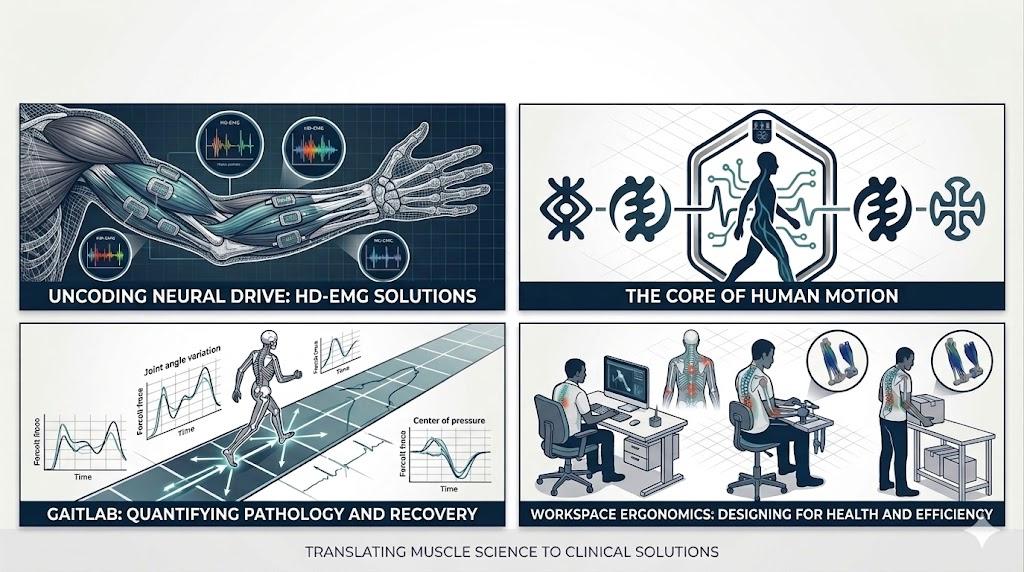
Pillar 01 — Clinical Gait Analysis

Quantifying Pathological Movement

We employ state-of-the-art motion capture systems, force platforms, and surface electromyography to characterize movement abnormalities in clinical populations. Our research establishes objective biomechanical "fingerprints" for conditions such as osteoarthritis, stroke, cerebral palsy, and Parkinson's disease.

Key Focus Areas
  • Post-stroke gait rehabilitation assessment
  • Osteoarthritis progression monitoring
  • Pediatric gait disorders (cerebral palsy)
  • Orthotic and prosthetic outcome evaluation
Techniques
3D motion capture Force plate analysis Inverse dynamics Spatiotemporal parameter extraction
Pillar 02 — Motor Unit Dynamics via EMG

Decoding the Neural Drive to Muscle

Using high-density surface electromyography (HD-EMG) and advanced decomposition algorithms, we non-invasively decode the discharge patterns of individual motor units. This provides unprecedented insight into how the central nervous system recruits and controls muscle fibers during both healthy and pathological movement.

Key Focus Areas
  • Neural mechanisms of muscle fatigue
  • Motor unit behavior in neurological disorders
  • Biomarker development for early disease detection
  • Biofeedback for motor recovery
Techniques
HD-EMG Motor unit decomposition Spike train analysis Neural drive mapping
Pillar 03 — Ergonomics & Occupational Biomechanics

Bridging Lab to Life

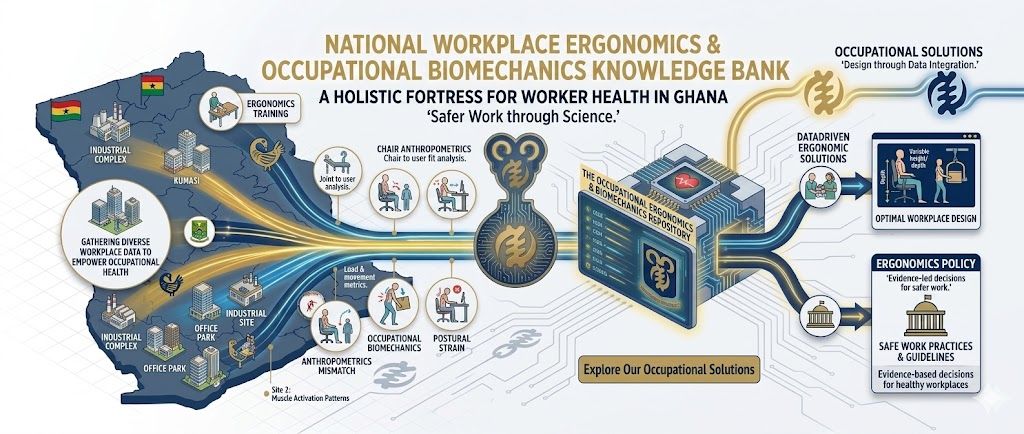
We translate insights from gait and motor unit analysis into evidence-based ergonomic interventions that reduce injury risk and enhance workplace performance. Our work integrates anthropometric data with biomechanical models, with particular focus on low-resource settings where access to automation is limited.

Key Focus Areas
  • Workplace design and musculoskeletal disorder prevention
  • Anthropometric database development for Ghanaian populations
  • Seating ergonomics and posture assessment
  • Tool and equipment design for safety
Techniques
RULA OWAS Anthropometric measurement Multi-criteria decision analysis
3-Scale Integration Framework
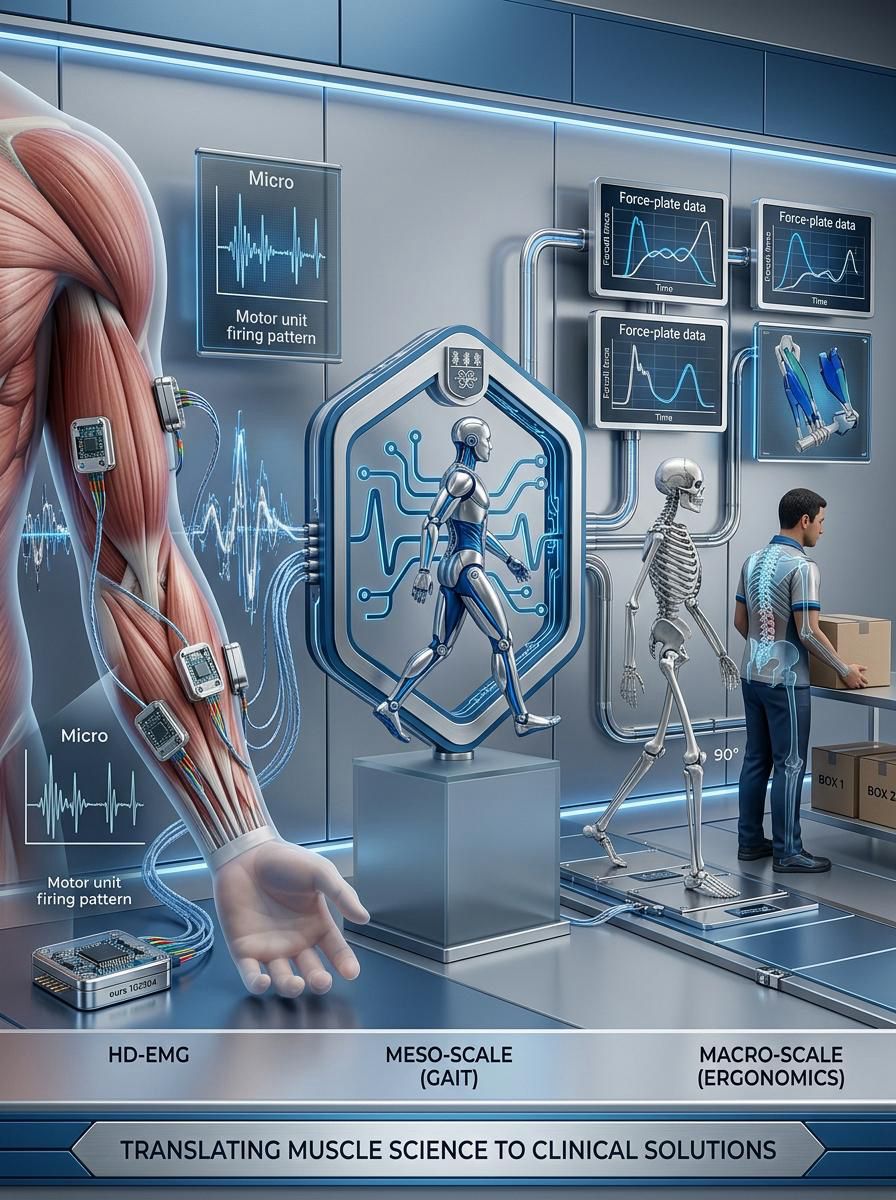
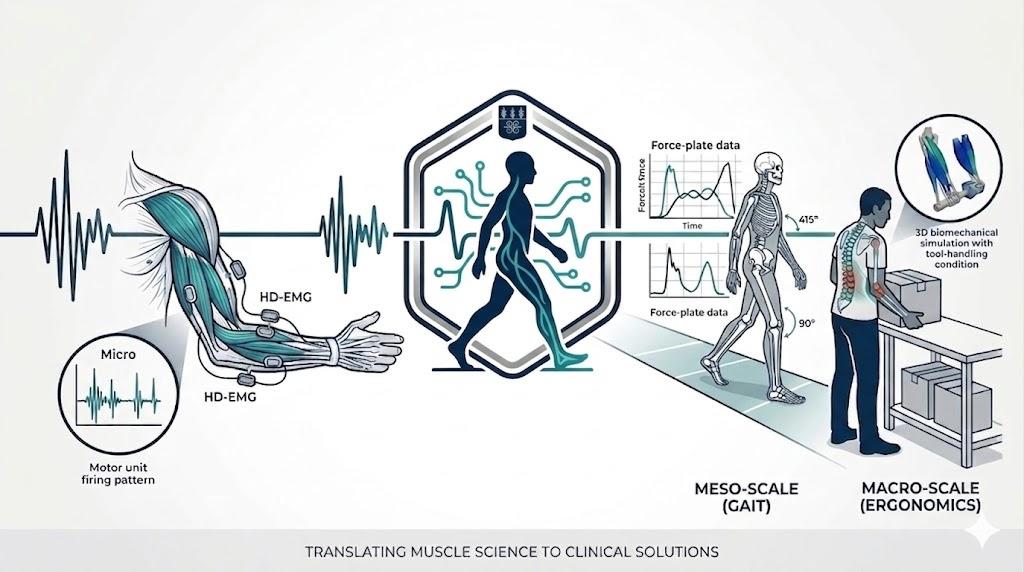
KKD Lab integrated framework showing HD-EMG micro scale motor unit dynamics, meso-scale gait analysis, and macro-scale ergonomics translating muscle science to clinical solutions
HD-EMG (Micro)
Meso-Scale (Gait)
Macro-Scale (Ergonomics)
Our Framework

From Neuron to Environment: Our Integrated Framework

Our research treats the human motor system as a continuum across three scales — from the microscopic activation of individual muscle fibres through whole-body movement to interaction with the physical world.

Micro
Motor Unit → Nervous System Activation
How the nervous system recruits and controls individual motor units to activate muscle fibres — decoded via HD-EMG decomposition.
Meso
Gait → Whole-Body Movement
How neural activation translates into whole-body movement patterns — quantified using 3D motion capture, force platforms, and inverse dynamics.
Macro
Ergonomics → Physical World Interaction
How movement interacts with the physical world — applied to workplace design, injury prevention, and ergonomic guidelines for Ghanaian industries.
By fusing these levels, we develop comprehensive digital health tools that not only diagnose movement disorders but also predict injury risk and prescribe personalized, biomechanically-informed interventions.
Explore Our Research